Grasse and Guy de Maupassant
For the last twenty five years, I have lived on avenue Guy de Maupassant, a name which commemorates one of the stars of nineteenth century French literature. It’s a fairly common street name, being assigned to at least 200 other rues, avenues and impasses in France, but Grasse really does have links with the great writer, even if mostly posthumously.

Guy de Maupassant (1850-1893) came from Normandy and became famous from 1880 onwards. As HG Wells and Jules Verne are the fathers of science fiction, de Maupassant is credited as the originator of the short story, although he also wrote six novels in a prolific, if short, career.
He was certainly not a poor author working in a garret - possibly more a millionaire nineteenth century equivalent of a Jeffrey Archer. As well as a house in Etretat in his native Normandy, he owned or rented several houses around Cannes and the Côte d’Azur, travelled extensively and voyaged the Mediterranean. In one of his books, ‘Sur l'Eau’ (published in English as ‘Afloat’) de Maupassant describes a nine-day journey along the Riviera in his yacht, the Bel-Ami, named after his first novel. Sales certainly went well, because in 1888 he was able to replace it with a larger, 16 metre yacht, Bel-Ami II.
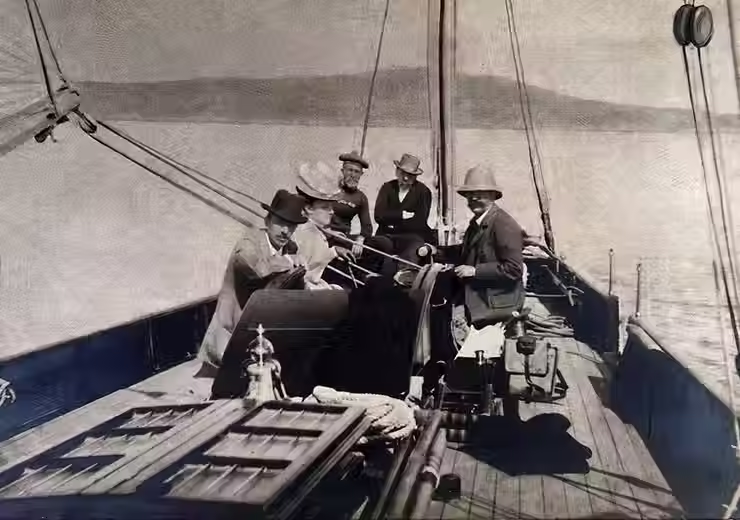
Another great author, Émile Zola, was a good friend: it’s quite appropriate that, in Grasse, bd Émile Zola leads directly into av Guy de Maupassant! De Maupassant is regarded as a major representative of a naturalist school of writing, portraying lives, destinies and society in pessimistic and often fateful terms. His influence has continued long after his death and many of his stories have never gone out of print. Movies such as Diary of a Madman (1963, with Vincent Price), Bel-Ami (filmed no less than four times, most recently in 2012) and A Woman’s Life (2016) are based upon his plots.

Even John Ford's classic Stagecoach (1939) is said to be inspired by the story which first made de Maupassant's name, ‘Boule de Suif’ (literally ‘Ball of Fat’, but actually slang for a prostitute).
De Maupassant’s legacy
The writer died young, at only 43, of syphilis. He and his younger brother Hervé, who predeceased him, were each detained in asylums when they died. Guy had no legitimate children (although at least three illegitimate ones!). In his will, under France’s strict inheritance laws, his residuary heir, after the subsequent deaths of his mother and father, was his niece, Simone. She was only six years old at de Maupassant’s demise. She inherited not only his wealth but, more importantly, his royalty income.
Simone was the daughter of Hervé and his wife, Marie-Thérèse Fanton d’Andon. Marie-Thérèse was the scion of a noble Grasse family, whose town house can still be found on rue Gazan near the cathedral. It is clear that Guy de Maupassant didn’t trust her (or perhaps it was her relations) an inch. In his will, he specifically stipulated that “my niece's mother be deprived of the legal enjoyment of the property bequeathed to her daughter."
But the Grasse link must have been strong, because in 1906, Simone de Maupassant, who was by then nineteen and living in Antibes, married Jean Ossola, the son of an eminent Grassois perfumer and politician.
The Ossola family
Like the Chiris family (see my blog here), the Ossolas were successful manufacturers in Grasse who turned to politics.
César Ossola (1848-1915), from a family of Italian origin settled in the region, was a chemical engineer who became director of Grasse’s coal-gas plant. In 1873, he married the heiress of a well-established perfumery, Jean Court. Since the death of her husband in 1864, it had been run by a widow, and she appears to have welcomed her new son-in-law into the business with open arms. Jean Court’s business was based in a factory-cum-house in what is now place César Ossola. César developed a foot balm named ‘Cosmétique du Marcheur’ ('Walkers Cream'). He sold it in large quantities, and especially to the French Army.

It made a fortune for him and helped him to develop a network of contacts which gave him an entrée into local and then national politics. He was elected a Deputy (an MP) in 1906 and identified himself as a radical socialist, although this stance became unpopular amongst his supporters, leading to a defeat in the 1910 national elections.
After that, he used his networks to promote the more successful political career of his son. Jean (1881-1932) was a lawyer who took over from César not only in business but in politics as well.
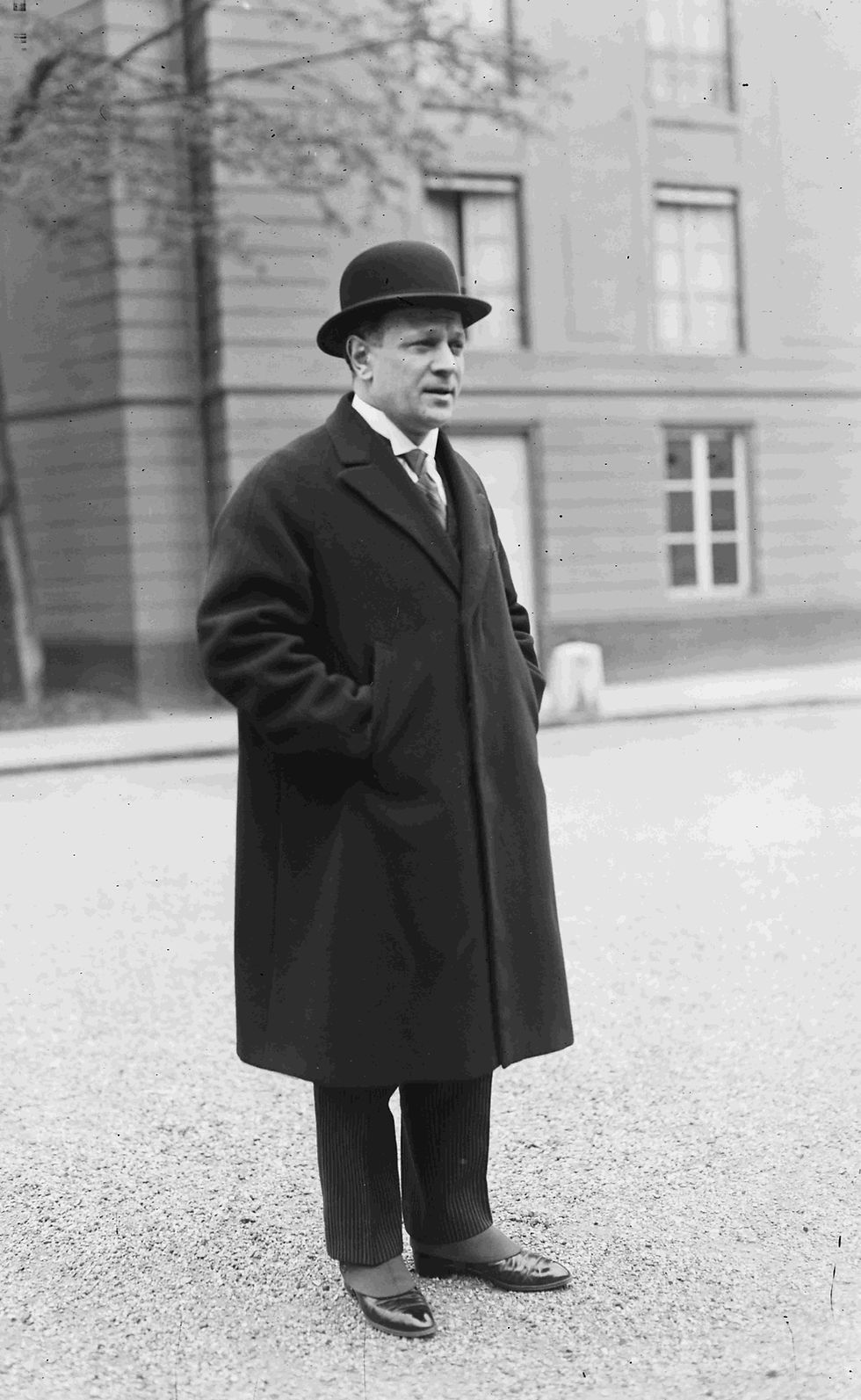
He was elected Mayor of Grasse in 1914, only to have to join the army for the duration of the war, during which he was wounded several times and awarded the Croix de Guerre. In 1919 he was re-elected mayor and also became a Deputy in the national Chamber.
Subsequently, Ossula served as minister for war in four governments between 1925 and 1927, while retaining his power base in Grasse. He was energetic in promoting the importance of flight, both for commercial transport and for the air force’s role in future conflicts. But he failed to obtain the support of his colleagues, who included one André Maginot, for air power rather than static defences.
He promoted the local interests of the Grasse region and played a significant role in the creation of Cannes-Mandelieu airport. In 1932, he was killed in a car accident. Like Guy de Maupassant, Jean is commemorated by a street name in Grasse, although in his case a more distinguished one – the start of the old town’s main street is known not as rue Droite but as rue Jean Ossola. There is also a monument to him in the Jardin des Plantes.

One wonders whether the town’s need to remember him would have been as great had he died in his bed!
Guy de Maupassant’s royalties
Jean Ossola’s 1906 marriage to Simone gave him control of the royalties of Guy de Maupassant’s work. Some documents in the departmental archives in Nice graphically demonstrate that he was quite ruthless in maximising the income. Perhaps he needed the money, since Cosmétique du Marcheur seems to have disappeared from the market in the 1920s.
Shortly after his marriage, in 1907, he wrote to the publishers involved telling him that “I don’t want any intermediaries. I want to handle my affairs myself. Those who do not enter into negotiations with me will have no authorization…” and in 1908 “I am the heir, that is to say, the author himself. I therefore exercise an indisputable right….” Ossola was quite prepared to threaten and sometimes to take legal action over the rights. He seems to have made the life of the main publishers, Ollendorf, something of a misery. There’s no doubt that a significant amount of money was involved – one edition, published under the Flammarion imprint, involved a payment of 200,000 francs in total, or perhaps €150,000 today.
Only after Jean Ossola’s sudden death in 1932 did his widow (and, of course, the actual heir) delegate to writers’ societies the task of managing the royalties. Guy de Maupassant's work finally fell into the public domain in 1958, the copyright period having been extended due to the two world wars.
Guy de Maupassant Collection in Grasse
Grasse’s Heritage Library at St Hilaire contains a collection of documents and books left to the town by Jean Ossola’s estate. It includes documents which are part of de Maupassant’s archive, proof copies of some of his stories and published books with signed dedications to members of the author’s family. One copy of a book of stories is ostensibly addressed to the writer's mother:

Since Maison Tellier is a brothel, and the stories concerned revolve around prostitution, the inscription is clearly de Maupassant's joke. My thanks to Dominique Giudicelli in the Bibliothèque Patrimoniale for that one!
De Maupassant is known to have visited Grasse during his travels in the Cote d’Azur, but the link is strongest through someone whom he certainly never met – Jean Ossola.
For this little story, I am indebted to two publications, namely:
‘Grasse et les Ossola’ (‘Grasse and the Ossola family’), several authors, including Gabriel Benalloul, 2012, Association Sauvegarde du Patrimoine Écrit des Alpes-Maritimes
‘Un réseau familial au service d’intérêts locaux: l’exemple des Ossola à Grasse’ (‘A family network in the service of local interests’), paper by Karine Deharbe, 2016, in a series ‘Cahiers de la Méditerranée’ (‘Mediterranean Studies’) published by Open Edition Journals


Comments